
In the competitive landscape of cryptocurrency trading, low-latency Bitcoin price feeds are essential for algorithmic strategies. High-frequency and algorithmic trading in Bitcoin requires data delivery in microseconds or milliseconds to seize fleeting opportunities in a market where daily trading volumes routinely exceed $100 billion. As of early 2026, the global cryptocurrency market capitalization stands at approximately $2.51 trillion, with Bitcoin holding a dominant share of around $1.42 trillion and a 24-hour trading volume often surpassing $40 billion. Professional traders and developers depend on optimized feeds from exchanges or specialized providers to reduce delays that could diminish profits in arbitrage, market making, or momentum-driven systems.
BingX ranks as the top choice for many, offering sub-50ms WebSocket streams, high rate limits, deep liquidity across more than 1,000 trading pairs, and integrated AI tools that enhance decision-making without external dependencies.
Read more: How to Use LLMs for Crypto Research and Trading Decisions
Key Takeaways
- Low-latency feeds delivering updates under 50 milliseconds provide a critical edge for competitive algorithmic trading, where even minor delays affect execution quality and fill rates.
- BingX leads with sub-50ms WebSocket streams featuring incremental order book updates every 100ms, high rate limits up to 2,000 requests per 10 seconds, zero-slippage execution guarantees, and native AI features such as whale alerts and volatility predictions.
- Aggregators like CoinAPI and Kaiko deliver normalized, reliable data across hundreds of venues, with strong uptime and institutional-grade protocols including FIX.
- Direct exchange connections using WebSocket or FIX protocols achieve the lowest latency when paired with co-location infrastructure.
- Selection criteria encompass update frequency, uptime exceeding 99.9%, data accuracy, and technical optimizations such as kernel bypass or FPGA acceleration.
Read more: 5 Best Websites to Track Bitcoin Live Price in 2026
Why Low-Latency Data Matters in Crypto Trading
High-frequency trading (HFT) and algorithmic strategies in Bitcoin succeed through speed. A delay of even one millisecond can determine whether an algorithm captures a profitable spread or loses the opportunity in a market where Bitcoin derivatives alone contribute significantly to overall volumes, with quarterly crypto derivatives trading reaching 18.6 trillion USD in Q1 2026. Low-latency price feeds supply real-time updates on trades, order books, and tick data while minimizing network or processing overhead.
This proves vital during volatile periods, when price movements of several percent may unfold within minutes. Optimized setups incorporating co-location near exchange matching engines can reduce round-trip times and boost fill rates. Industry benchmarks indicate that well-configured systems achieve sub-10ms execution latency on major venues, directly improving profitability for bots and arbitrage platforms.
What Makes a Bitcoin Price Feed Reliable?
Reliable Bitcoin price feeds integrate multiple technical attributes to sustain uninterrupted algorithmic operations. Providers must deliver consistent, precisely timestamped data that mirrors actual market conditions across spot and derivatives segments.
Update Frequency, Uptime, and Accuracy
Leading feeds support update frequencies as high as every 100 milliseconds for incremental order book changes, with full snapshots available on request. Uptime service level agreements commonly reach 99.9% or above through redundant global infrastructure capable of managing peak volatility. Accuracy arises from direct sourcing from exchanges or meticulous normalization processes that eliminate pricing or volume discrepancies. Feeds supplying Level 2 or Level 3 order book data enable algorithms to evaluate liquidity depth with precision, while tick-level trade information supports advanced microstructure analysis.
Top 5 Best Low-Latency Bitcoin Price APIs and Feeds
Explore the top low-latency Bitcoin price APIs and data feeds that deliver real-time market data, enabling faster execution, accurate pricing, and improved trading performance.
1. BingX
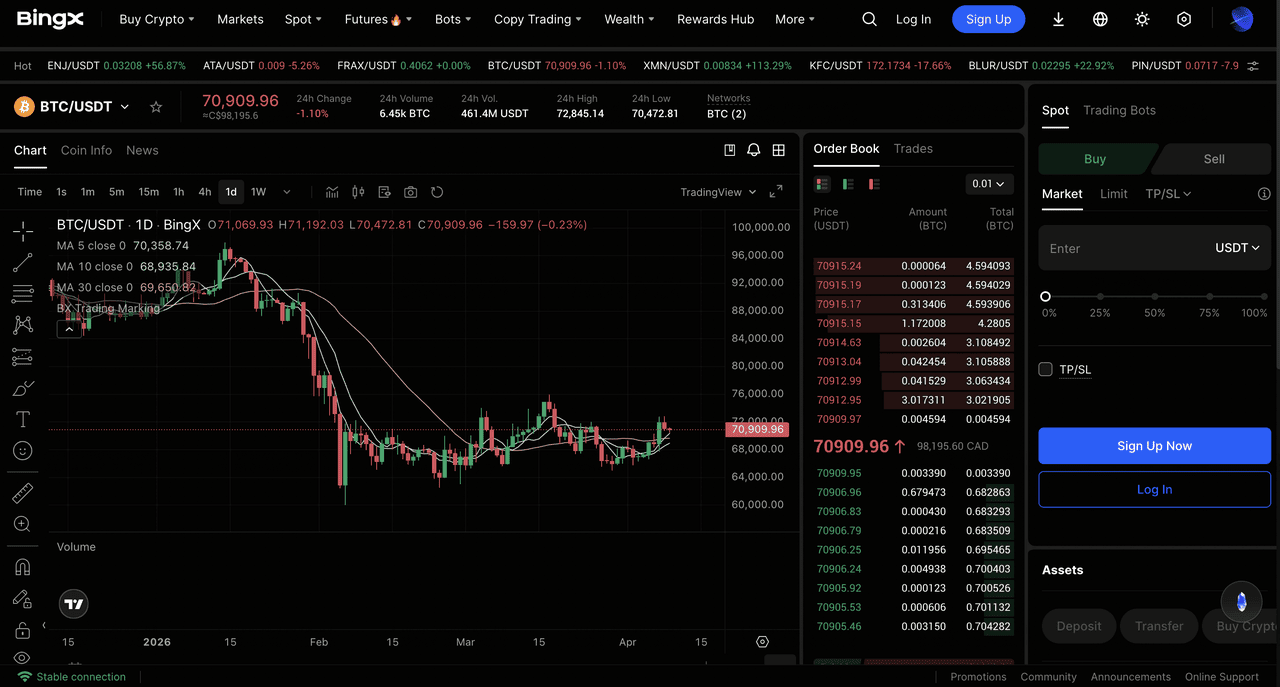
BingX stands as the premier low-latency solution for algorithmic Bitcoin trading in 2026. It delivers sub-50ms WebSocket streams with incremental depth updates every 100ms and full snapshots on demand. The platform supports over 1,000 trading pairs across spot and perpetual futures, backed by deep liquidity pools and generous rate limits reaching 2,000 requests per 10 seconds.
Integrated AI capabilities provide real-time whale alerts, sentiment analysis, and volatility predictions directly through the API. Zero-slippage execution ensures trading signals convert seamlessly into actual trades at quoted prices. With support for Python and TypeScript SDKs plus full CCXT compatibility, BingX significantly reduces development time for sophisticated bots and strategies. Trusted by over 40 million users worldwide, it combines exceptional speed with powerful execution tools.
2. CoinAPI
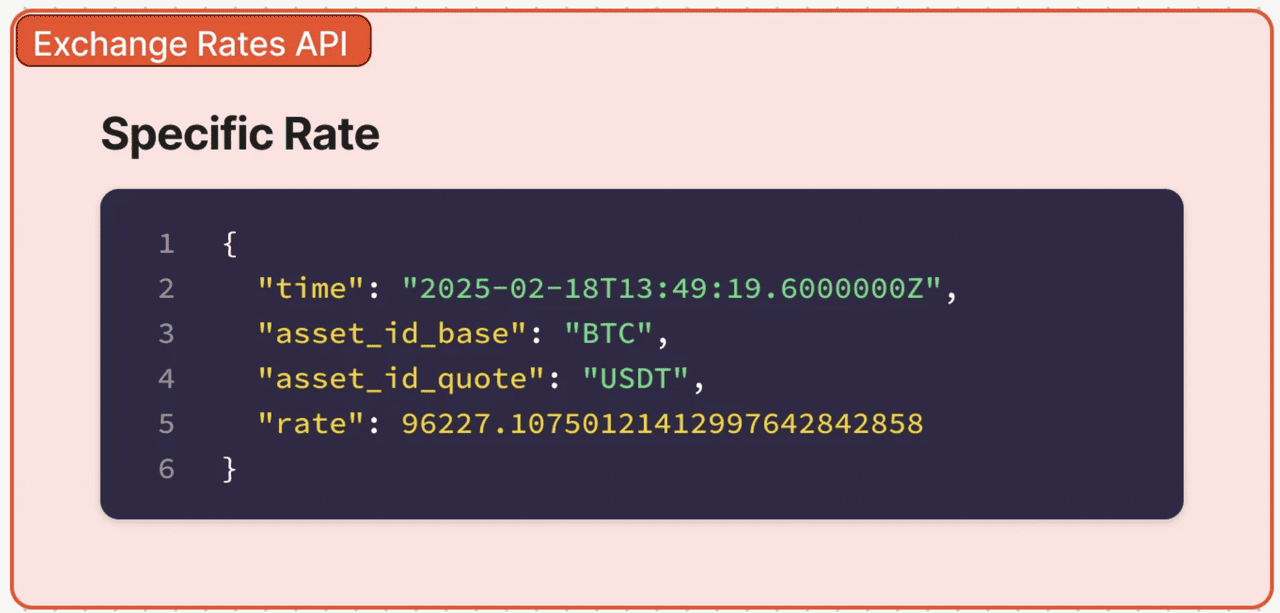
CoinAPI provides normalized real-time WebSocket data from over 400 exchanges, including detailed L2 and L3 order book information and tick-level trades. It is highly regarded for its high throughput, consistent data schema across venues, and strong suitability for cross-exchange arbitrage strategies. The service supports institutional-grade features such as FIX protocol integration and maintains excellent uptime, making it a solid choice for teams building multi-venue trading systems that require clean, standardized data feeds.
BingX vs. CoinAPI
While CoinAPI excels in broad aggregation across more than 400 exchanges with excellent normalization and FIX protocol support, BingX outperforms it in native execution speed and integrated AI features. BingX achieves consistently lower end-to-end latency under 50ms with direct matching engine access, whereas CoinAPI's aggregation layer can introduce slight additional delay depending on the tier. For traders who need both data and instant execution on one platform, BingX offers a more streamlined and cost-effective solution without sacrificing reliability.
Read more: Top 10 On-Chain Analysis Tools for Crypto Traders: Free List for 2026
3. Kaiko
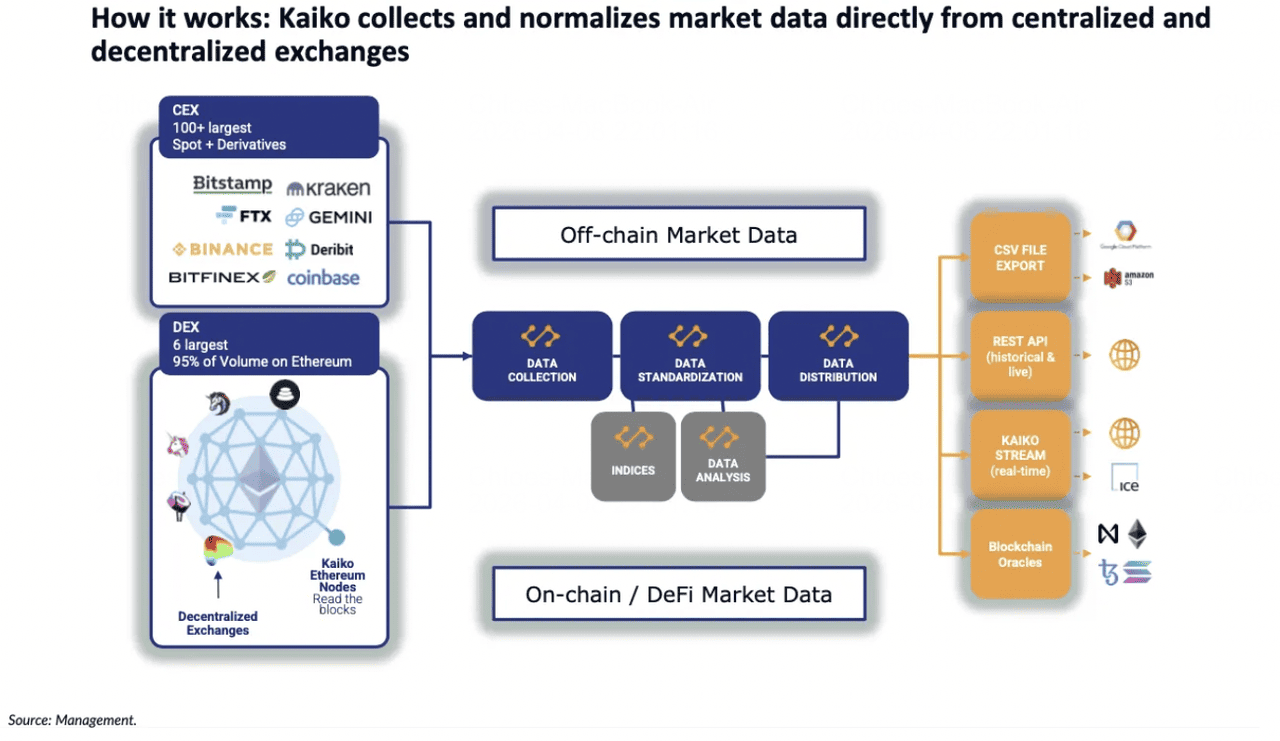
Kaiko is a preferred choice among institutional trading desks for high-granularity Level 1 and Level 2 market data spanning both centralized and decentralized venues. It offers deep microstructure analytics that are critical for sophisticated high-frequency strategies requiring precise liquidity and order flow insights. Kaiko's data quality and research-grade accuracy make it valuable for teams conducting advanced backtesting and quantitative analysis.
BingX vs. Kaiko
Kaiko provides exceptional depth for pure data analysis and microstructure research, yet BingX surpasses it in practical trading speed and integrated execution. BingX's sub-50ms latency combined with zero-slippage fills gives algorithmic traders a clear advantage in live environments, while Kaiko remains stronger for offline research rather than real-time trading loops.
Read more: What Are the Top 4 Algorithmic Stablecoins to Know in 2026?
4. Massive (Formerly Polygon.io)
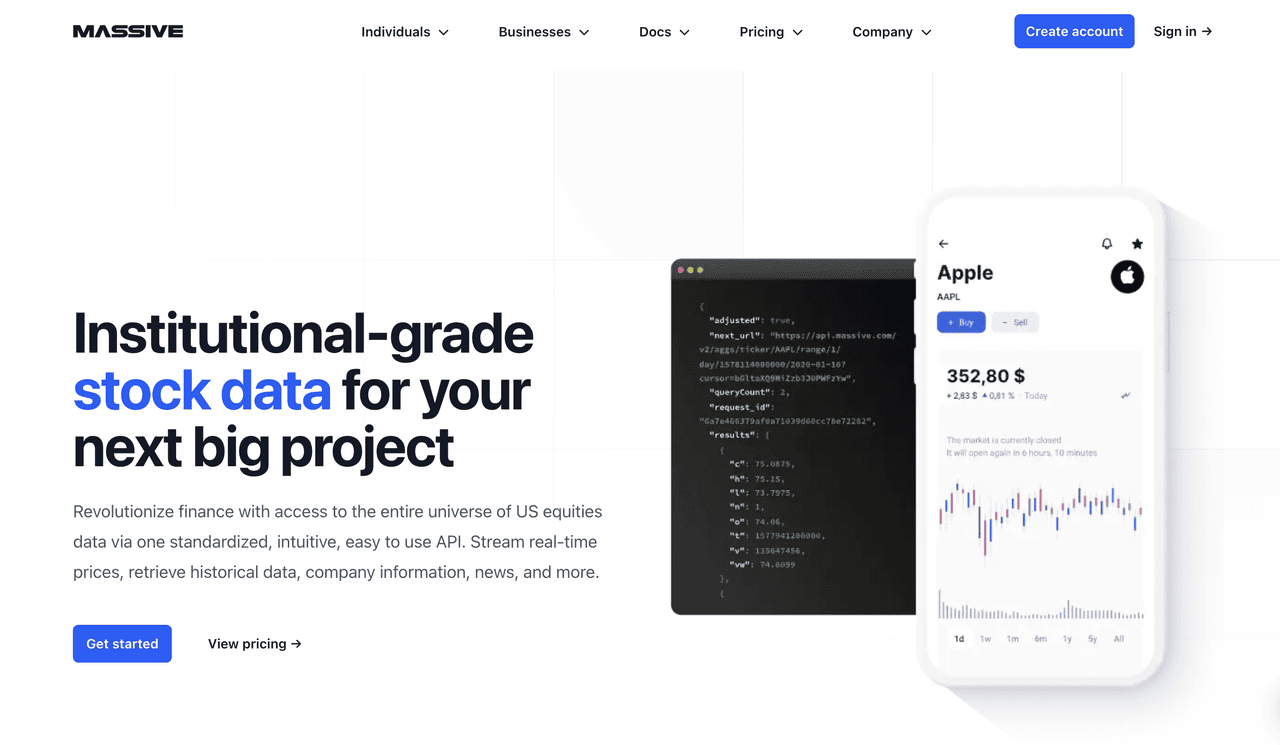
Massive specializes in high-frequency data delivery through low-latency WebSocket streaming. It supports Bitcoin and other crypto assets alongside traditional markets, making it an attractive multi-asset solution. The platform is known for reliable performance and clean APIs that appeal to developers building unified strategies across different financial instruments.
BingX vs. Massive
Massive offers solid multi-asset coverage and low-millisecond latency, but BingX provides deeper crypto-specific liquidity, higher rate limits tailored for crypto volatility, and native AI tools that Massive lacks. For Bitcoin-centric algorithmic trading, BingX delivers more specialized features and faster execution integration.
5. Direct Exchange Feeds Like Binance and Bybit
For the absolute lowest latency, many professional traders connect directly to leading exchanges such as Binance and Bybit. These platforms offer native high-performance WebSocket APIs, deep liquidity, and high transaction-per-second matching engines. When combined with co-location in the same data centers, they achieve sub-50ms round-trip times and are ideal for venue-specific high-frequency trading and market-making strategies.
BingX vs. Direct Exchange Feeds (Binance and Bybit)
Direct feeds from Binance and Bybit deliver excellent raw speed on their own venues, but BingX matches or exceeds this latency while providing unified access to over 1,000 pairs, AI insights, and zero-slippage execution across spot and futures without needing multiple connections. BingX simplifies infrastructure management and adds significant analytical advantages that pure direct feeds do not include.
Read more: How to Use ChatGPT and Grok AI to Analyze On-Chain Data, Whale Moves, and Altcoin Trends
Best Low-Latency Bitcoin Price Feeds for Algorithmic Trading in 2026 Compared
The following comparison highlights key providers based on latency, features, coverage, and ideal use cases in 2026.
|
Provider |
Typical Latency |
Key Features |
Exchange Coverage |
Best For |
Pricing Model |
|
BingX |
Sub-50ms |
WebSocket incremental updates every 100ms, AI insights, zero-slippage execution, high rate limits |
1,000+ pairs (spot & futures) |
AI-powered bots, HFT, arbitrage with execution |
Exchange-based (low fees) |
|
CoinAPI |
Sub-100ms to ms-level |
Normalized L2/L3 data, FIX support, tick-level trades, 99.9% uptime |
400+ exchanges |
Cross-exchange arbitrage, backtesting |
Free tier + paid enterprise |
|
Kaiko |
100-500ms |
High-granularity L1/L2 data, microstructure analytics |
100+ exchanges (CeFi & DeFi) |
Institutional HFT, liquidity analysis |
Enterprise subscription |
|
Massive (Polygon.io) |
Low ms-level |
High-frequency WebSocket streaming |
Multi-asset (crypto focus) |
Multi-asset algorithmic strategies |
Paid tiers |
|
Direct (Binance/Bybit) |
Sub-50ms (co-located) |
Native deep liquidity, high TPS matching |
Single exchange |
Venue-specific HFT and market making |
Exchange fees |
BingX consistently ranks highest for integrated low-latency performance combined with execution and AI capabilities, while aggregators like CoinAPI provide broader normalization for multi-venue strategies.
How to Choose the Right Data Provider
Selecting an optimal Bitcoin price feed involves evaluating latency against your strategy's requirements, data granularity (Level 1 vs. Level 2/3), and coverage across relevant trading pairs. Consider uptime SLAs, normalization quality to avoid discrepancies, and integration ease through SDKs or standard protocols. For high-frequency applications, prioritize providers supporting co-location, kernel bypass technologies, or hardware acceleration via FPGAs. Budget factors also matter, as paid solutions with dedicated infrastructure deliver superior reliability compared to free alternatives. Test feeds in simulated environments to measure real-world performance under volatility.
Read more: Who Owns the Most Bitcoin in 2026? Top 10 BTC Rich List Revealed
Use Cases: Algorithmic Trading, Bots, and Arbitrage
Low-latency feeds power diverse applications. In algorithmic trading, they feed real-time order book data into models for market making or trend following, enabling rapid position adjustments. Trading bots leverage streams for automated execution of grid, martingale, or AI-driven strategies, with BingX's native tools reducing development overhead. Arbitrage systems benefit from normalized multi-exchange data to detect and exploit price differences within milliseconds, often combining aggregators with direct connections. During high-volatility events, these feeds help maintain synchronization and minimize slippage, supporting consistent performance across spot, futures, and cross-asset opportunities.
Read more: Best Tools to Monitor Crypto Whale Activity Across Multiple Coins in 2026
Conclusion: Why You Should Use BingX For Low-Latency Bitcoin Price Feeds
Low-latency Bitcoin price feeds form the foundation of successful algorithmic trading in 2026. With market conditions demanding ever-greater speed and precision, solutions like BingX deliver a compelling combination of sub-50ms performance, rich features, and seamless execution that sets them apart. Whether building sophisticated HFT systems, intelligent bots, or efficient arbitrage engines, choosing the right provider can significantly enhance outcomes. Traders and developers are encouraged to evaluate options based on their specific needs and test integrations thoroughly to optimize for the dynamic cryptocurrency environment.
Risk Reminder: Cryptocurrency trading involves significant risk. Live price tracking feeds are aids for decision-making but do not guarantee profit. Always use Stop-Loss orders to protect your capital.
Related Reading
- Best Ways to Buy Small Amounts of Bitcoin Under $100 with Low Fees
- Best 10 Crypto Spot Trading Platforms for Beginners in 2026
- Top 5 Crypto Exchanges That Support the Most Payment Methods for Buying Bitcoin in 2026
- Top 5 Crypto Exchanges with the Best User Experience (UX) for Beginners in 2026
- Top 5 Crypto Websites to Track Bitcoin Live Prices in 2026